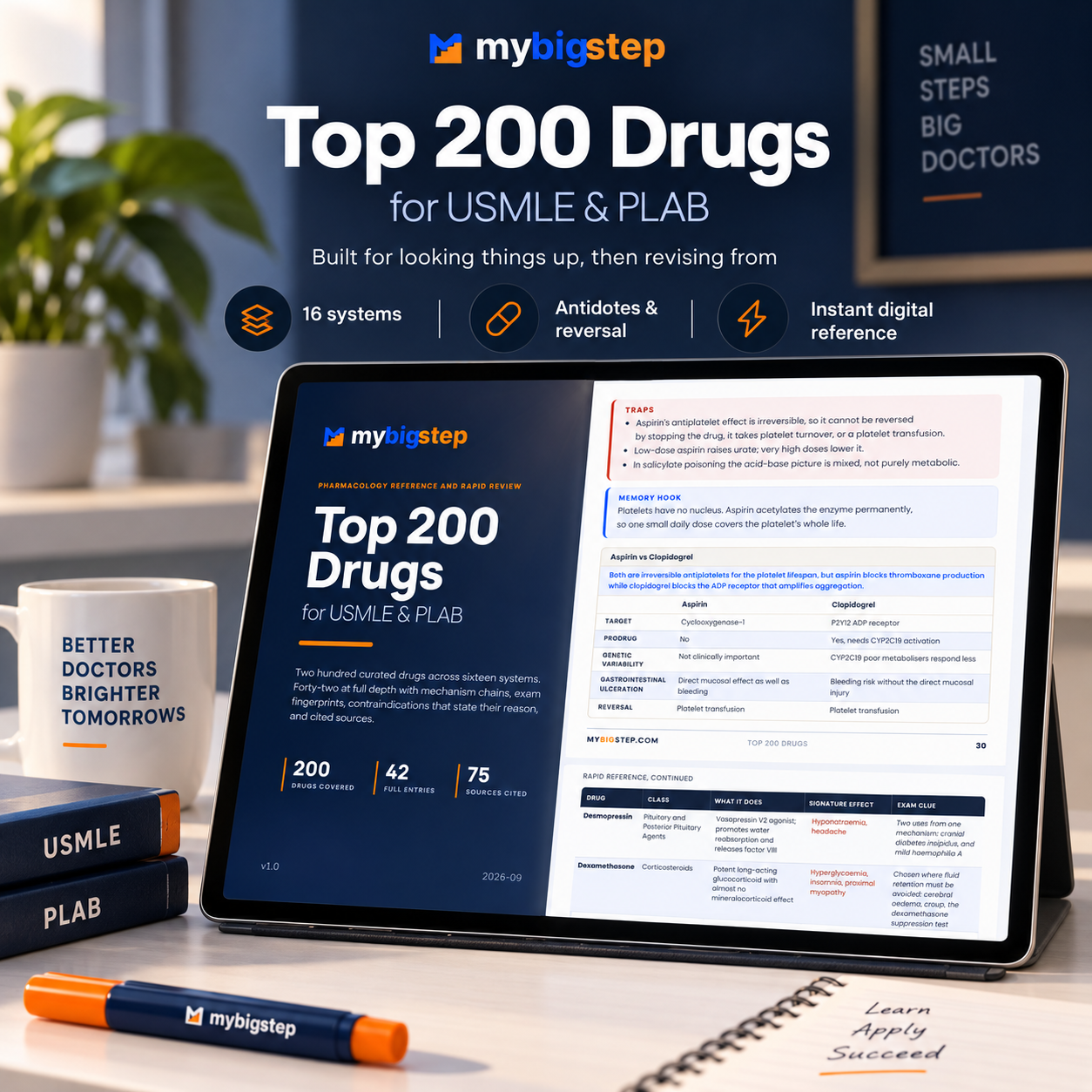
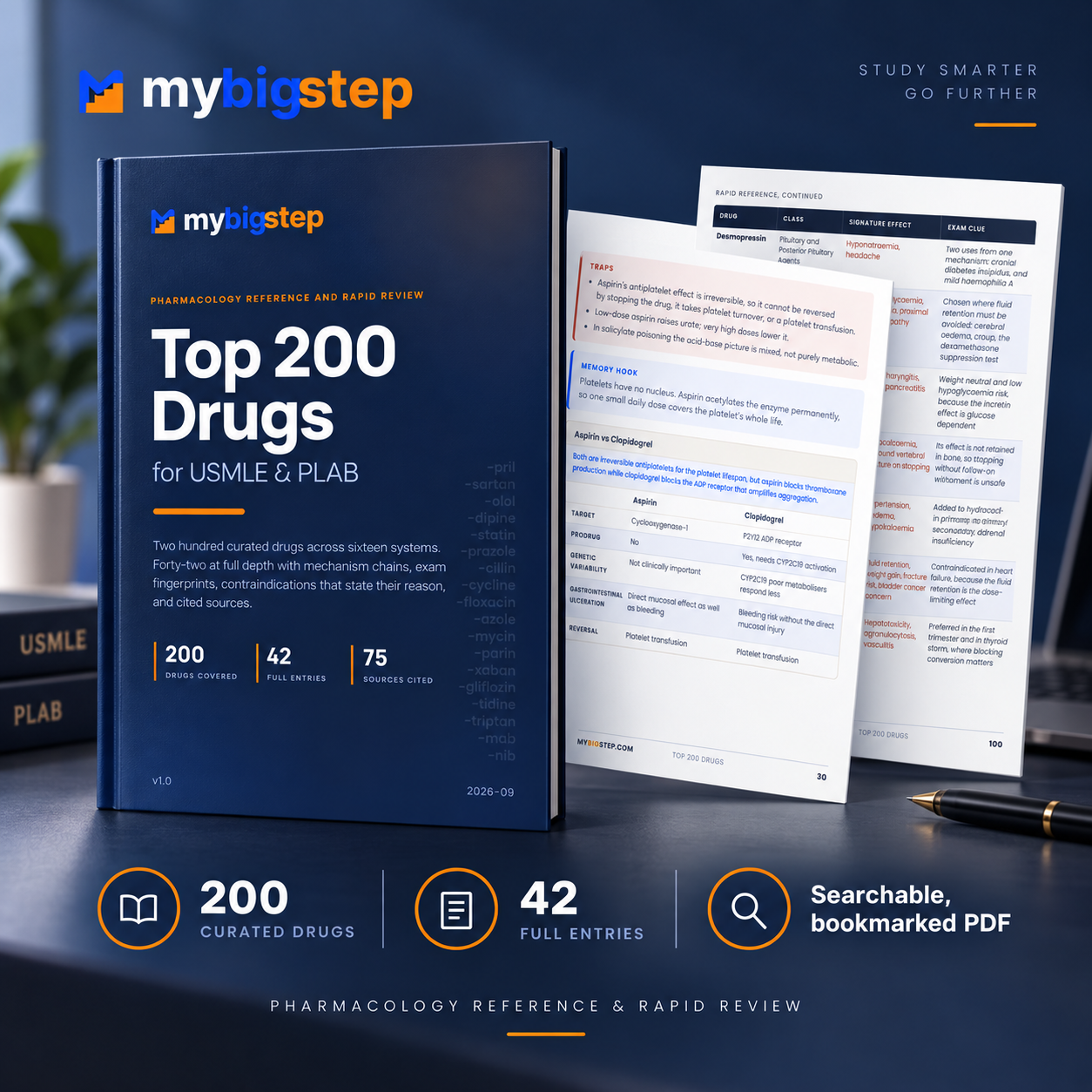
Two hundred drugs, organised so you can actually find one.
Most pharmacology resources are written to be read front to back. This one is written to be looked things up in, and then to be revised from. Two hundred curated drugs across sixteen systems, with a method at the front that turns them from two hundred separate facts into about twenty patterns and a short list of exceptions.
What is inside
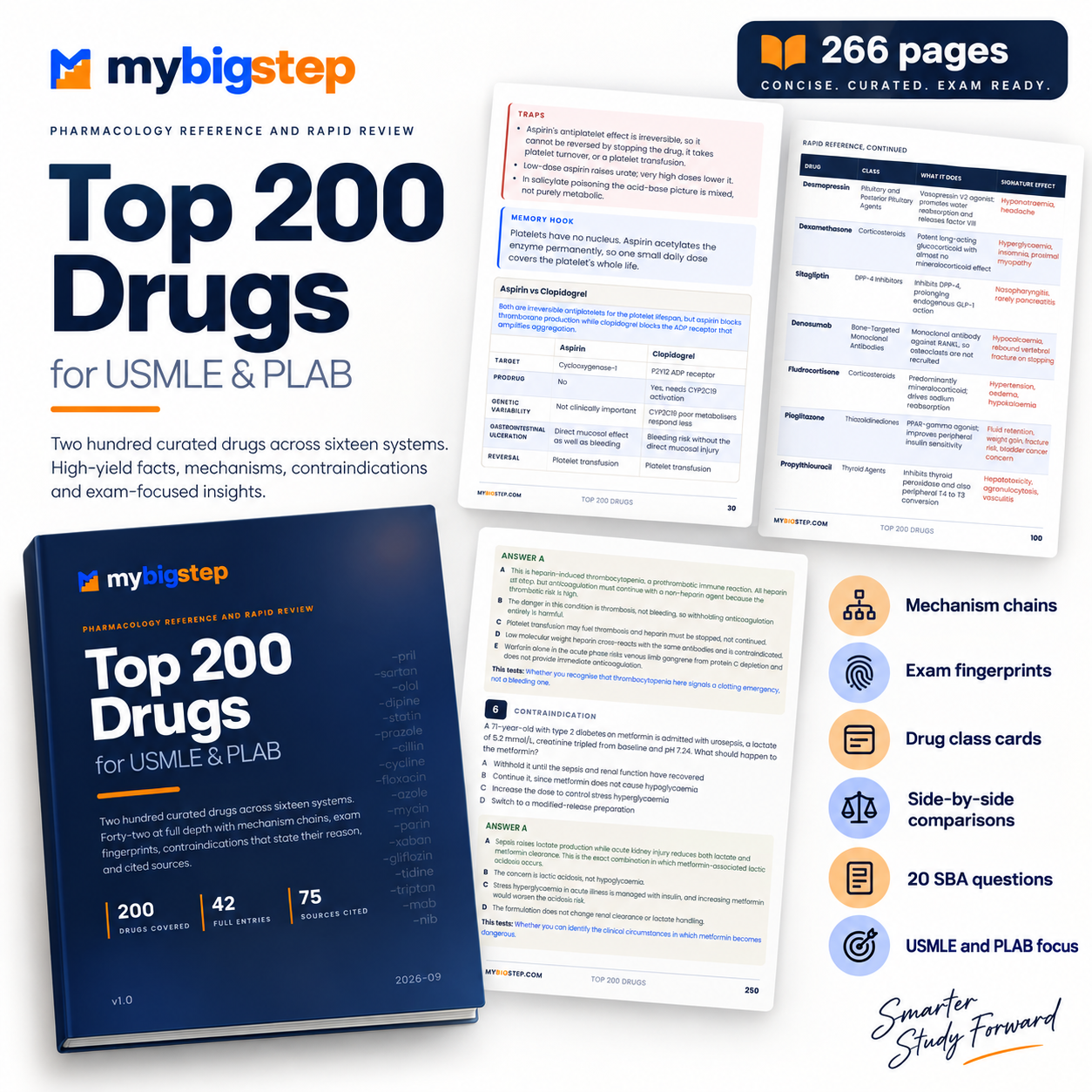
42 full entries. Each one opens with a quick reference table laid out identically every time: class, target, mechanism in a sentence, main uses, signature toxicity, antidote, name pattern. Then a mechanism chain, an exam fingerprint, adverse effects split into signature and other, contraindications each with the reason it matters, an interaction table stating mechanism and consequence, monitoring, and what the USMLE and the PLAB each ask about that drug.
158 concise entries. Three facts each: what the drug does, the effect that identifies it, and the clue an examiner uses. Grouped by system, in rapid reference tables.
41 drug class cards. The shared mechanism, the effects the whole class carries, and the differences that actually separate its members, which is the only reason an examiner picks one member over another.
7 side by side comparisons for the pairs that lose marks, each opening with one sentence that separates them.
20 single best answer questions with an explanation on every option, right and wrong.
The two hundred at a glance: an alphabetical index with class, system and identifying effect, which is the page to photograph.
Antidotes and reversal, including why an antidote with a shorter half life than its poison needs repeating.
266 pages, with PDF bookmarks and a clickable contents so a reference you cannot navigate does not become a reference you never open.
It answers the two examinations separately
Every full entry carries a USMLE block and a PLAB block, because the two examinations ask about the same drug differently. That is the part no single country resource gives you, and it is why one book can serve both without pretending they are the same test.
How it is written
Mechanism chains rather than lists. Every contraindication states its reason, because a contraindication without a reason is a fact to memorise rather than to understand. There are no dosing regimens: dosing is the part of pharmacology most likely to be wrong and most dangerous to get wrong confidently, and the questions these drugs attract test mechanism, recognition, toxicity and selection instead. Two numbers appear in the whole book, and both belong to one question where the number is itself the examinable fact.
What it is not
The two hundred are a curated teaching selection by MyBigStep. No examination board and no medical regulator publishes a syllabus of two hundred drugs, and nothing in this book pretends one exists. The two tiers are marked in the index, so nothing implies more depth than is present. It is a reference and a revision tool, not a question bank and not a clinical formulary.
The honest part
Built with AI assistance and reviewed by a person. That wording is deliberately narrow: it means a human read the content. It does not mean a named clinician has certified it. Every full entry cites at least one dated source, and all 75 sources are listed at the back with the date each was accessed, so the claim is inspectable rather than asserted.
This is an educational study aid for examination preparation. It is not medical advice and must not be used to guide the care of a patient. No examination outcome is promised or implied. Verify every clinical decision against your local formulary and current guidance. MyBigStep is not affiliated with, endorsed by, or sponsored by any examination board or licensing authority.
Delivered as a single searchable PDF with bookmarks, for laptop, tablet or print.
Two hundred drugs, organised so you can actually find one.
Most pharmacology resources are written to be read front to back. This one is written to be looked things up in, and then to be revised from. Two hundred curated drugs across sixteen systems, with a method at the front that turns them from two hundred separate facts into about twenty patterns and a short list of exceptions.
What is inside
42 full entries. Each one opens with a quick reference table laid out identically every time: class, target, mechanism in a sentence, main uses, signature toxicity, antidote, name pattern. Then a mechanism chain, an exam fingerprint, adverse effects split into signature and other, contraindications each with the reason it matters, an interaction table stating mechanism and consequence, monitoring, and what the USMLE and the PLAB each ask about that drug.
158 concise entries. Three facts each: what the drug does, the effect that identifies it, and the clue an examiner uses. Grouped by system, in rapid reference tables.
41 drug class cards. The shared mechanism, the effects the whole class carries, and the differences that actually separate its members, which is the only reason an examiner picks one member over another.
7 side by side comparisons for the pairs that lose marks, each opening with one sentence that separates them.
20 single best answer questions with an explanation on every option, right and wrong.
The two hundred at a glance: an alphabetical index with class, system and identifying effect, which is the page to photograph.
Antidotes and reversal, including why an antidote with a shorter half life than its poison needs repeating.
266 pages, with PDF bookmarks and a clickable contents so a reference you cannot navigate does not become a reference you never open.
It answers the two examinations separately
Every full entry carries a USMLE block and a PLAB block, because the two examinations ask about the same drug differently. That is the part no single country resource gives you, and it is why one book can serve both without pretending they are the same test.
How it is written
Mechanism chains rather than lists. Every contraindication states its reason, because a contraindication without a reason is a fact to memorise rather than to understand. There are no dosing regimens: dosing is the part of pharmacology most likely to be wrong and most dangerous to get wrong confidently, and the questions these drugs attract test mechanism, recognition, toxicity and selection instead. Two numbers appear in the whole book, and both belong to one question where the number is itself the examinable fact.
What it is not
The two hundred are a curated teaching selection by MyBigStep. No examination board and no medical regulator publishes a syllabus of two hundred drugs, and nothing in this book pretends one exists. The two tiers are marked in the index, so nothing implies more depth than is present. It is a reference and a revision tool, not a question bank and not a clinical formulary.
The honest part
Built with AI assistance and reviewed by a person. That wording is deliberately narrow: it means a human read the content. It does not mean a named clinician has certified it. Every full entry cites at least one dated source, and all 75 sources are listed at the back with the date each was accessed, so the claim is inspectable rather than asserted.
This is an educational study aid for examination preparation. It is not medical advice and must not be used to guide the care of a patient. No examination outcome is promised or implied. Verify every clinical decision against your local formulary and current guidance. MyBigStep is not affiliated with, endorsed by, or sponsored by any examination board or licensing authority.
Delivered as a single searchable PDF with bookmarks, for laptop, tablet or print.