Pharmacology gets hard when you try to memorize every drug as separate lists of uses, side effects, contraindications, and interactions.
This guide teaches one connected framework instead.
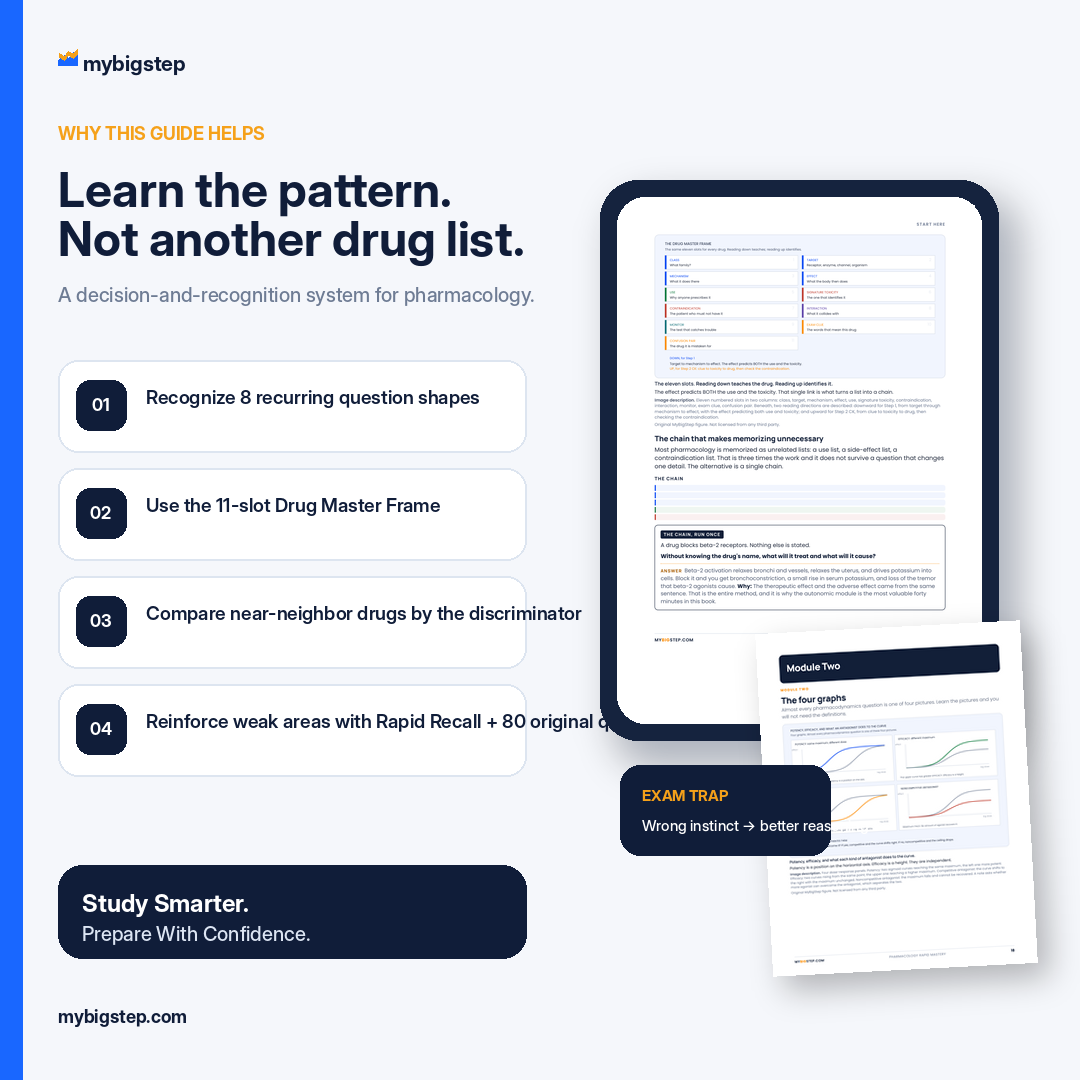
Start with the target, follow it to the mechanism, then the physiologic effect. From there, you can understand the clinical use, predict toxicity, recognize contraindications, and identify the drug from an exam clue.
The goal is simple: less disconnected memorization, more exam-ready reasoning.
The guide is structured around the pharmacology tasks described in official USMLE examination specifications.
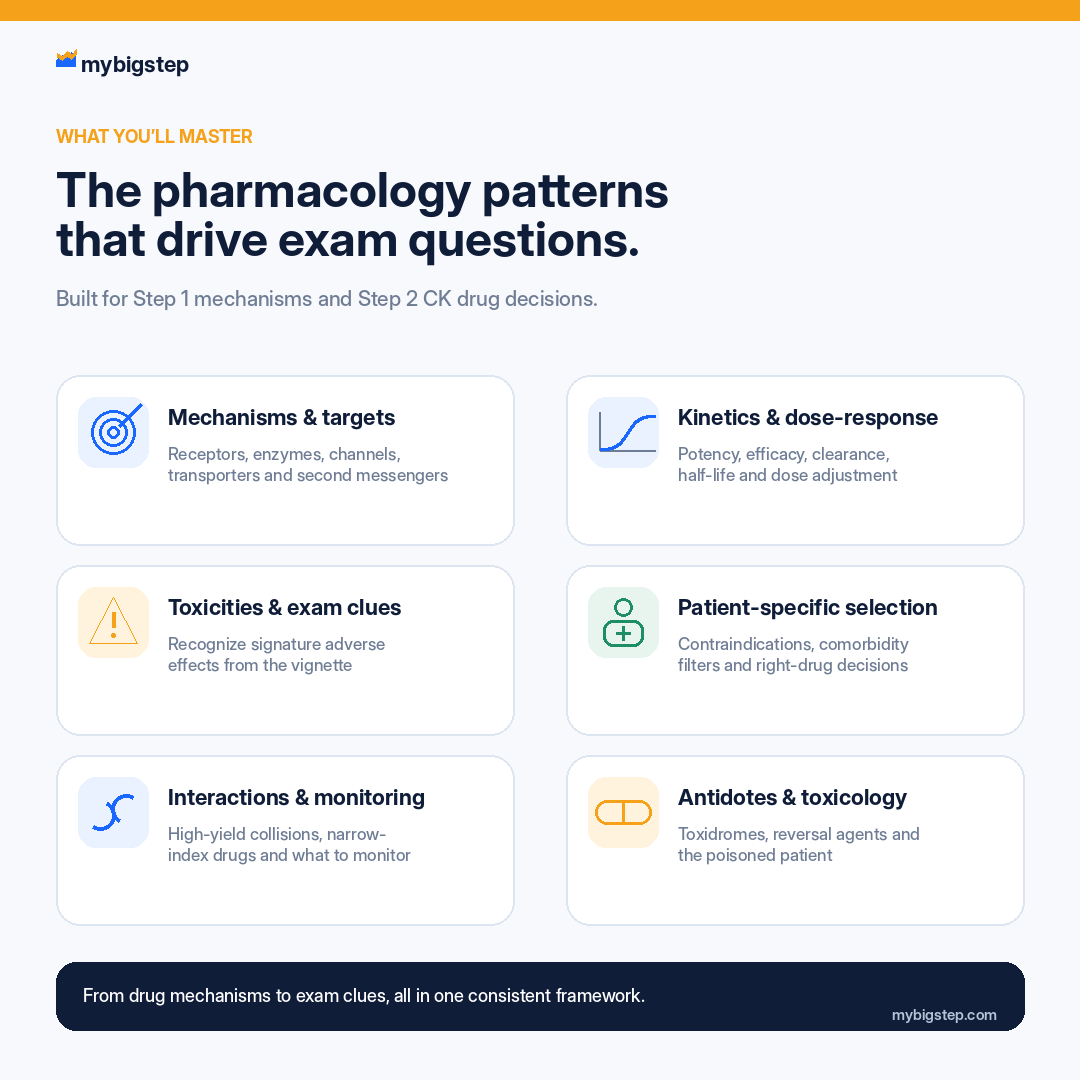
For Step 1, the focus is mechanism, targets, pathways, and drug recognition.
For Step 2 CK, the focus expands to patient-specific drug selection, adverse effects, interactions, contraindications, regimen changes, and monitoring.
87 Drug Fingerprint Cards using the same 11-part framework for every drug or class
144 One Clue, One Drug Cards for fast vignette recognition
30 original diagrams covering high-yield systems and drug relationships
30 Drug vs Drug comparisons that show the key discriminator between commonly confused options
42 Exam Trap Cards explaining common reasoning mistakes and distractors
20 One Drug, Three Questions features showing how the same drug can be tested through mechanism, toxicity, or treatment
10 decision algorithms for recurring clinical pharmacology scenarios
80 original practice questions with explanations for the correct answer and every distractor
Rapid Review section covering 139 must-know drugs and classes, signature adverse effects, CYP interactions, pregnancy considerations, and renal/hepatic rules
The guide helps you recognize recurring pharmacology question patterns such as:
Mechanism of action
Drug selection
Signature toxicity
Contraindications
Drug interactions
Monitoring
Antidotes
Patient-specific treatment decisions
Instead of asking only, “What does this drug do?”, you train yourself to ask:
Why is this the right drug for this patient, and what clue in the question proves it?
The guide addresses several areas where older study resources may still use outdated conventions, including:
Metformin and eGFR
Current pregnancy labeling
Valproate pregnancy restrictions
Fluoroquinolone safety warnings
Agent-specific anticoagulant reversal
ApoE4 considerations before anti-amyloid therapy
Relevant claims are documented and dated within the guide.
Generic drug names are used throughout.
Where U.S. and international terminology differs, the guide explains the difference when relevant. U.S.-specific prescribing conventions are also clarified rather than assumed.
This guide is designed for:
USMLE Step 1 students
USMLE Step 2 CK students
International medical graduates
Students who know drug names but struggle with mechanisms or clinical application
Students who frequently confuse similar drugs in answer choices
Anyone looking for a structured pharmacology review instead of another long list of facts
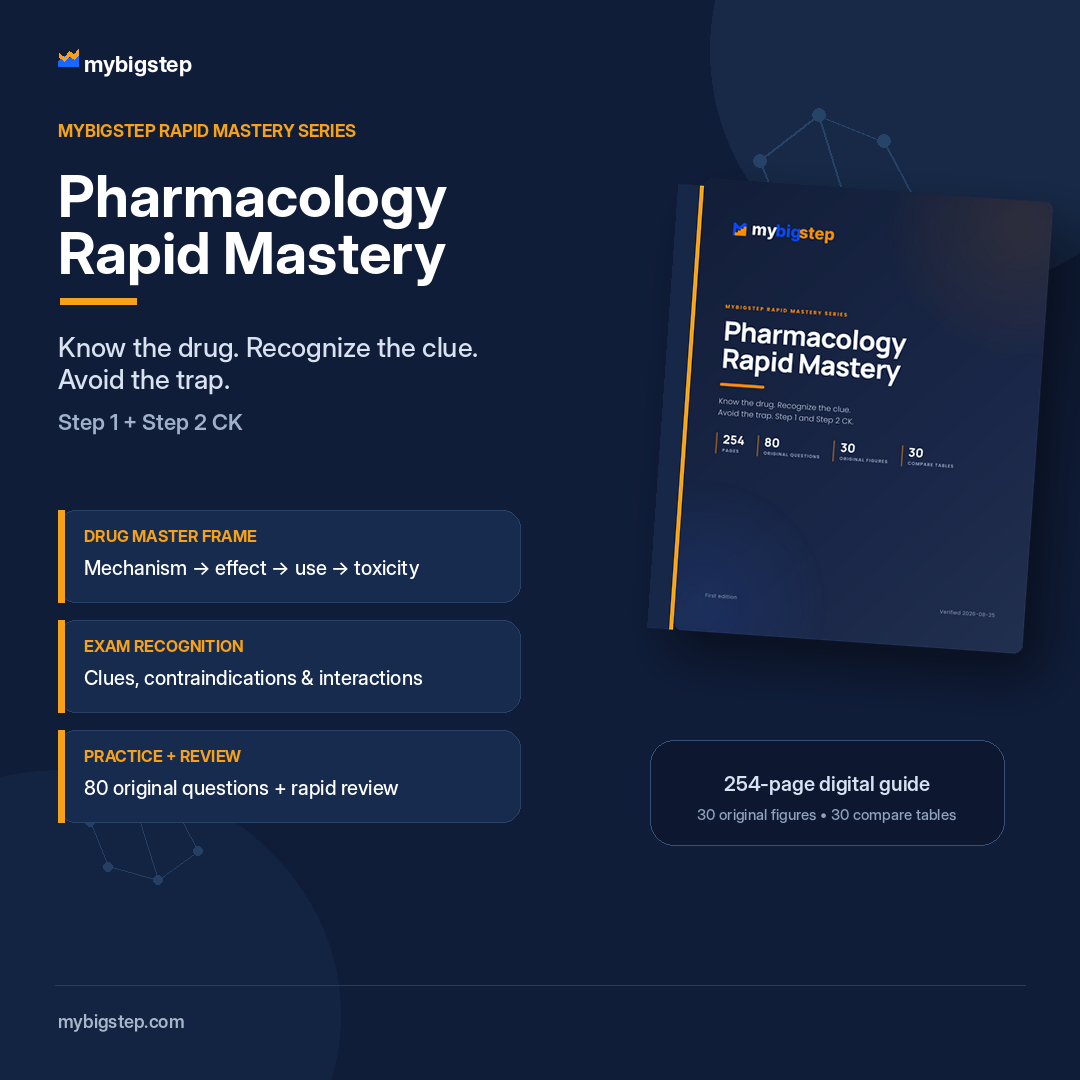
254-page digital PDF
Includes:
Clickable table of contents
Bookmarks
Visual cards, diagrams, and comparison tables
Black-and-white friendly design
Searchable text
Instant digital download
Is this a question bank?
No. It includes 80 original questions, but the main purpose is to teach the reasoning and recognition skills around pharmacology questions.
Is it for Step 1 or Step 2 CK?
Both. The guide shows how the same drug can be tested differently on each exam.
Are these real USMLE questions?
No. All questions and clinical vignettes were created specifically for this guide.
Does it include drug doses?
Only when the number itself is important for examination learning. This is not a prescribing manual.
USMLE Pharmacology Rapid Mastery helps you connect mechanisms to clinical decisions, recognize high-yield clues, distinguish similar drugs, and approach pharmacology questions with a clearer system.
From MyBigStep, drawing on more than a decade of experience supporting medical students and graduates preparing for the USMLE and the Match.
Educational resource for examination preparation only. Not medical advice or prescribing guidance. MyBigStep is independent and is not affiliated with or endorsed by the USMLE program, NBME, FSMB, ECFMG, or Intealth.
Pharmacology gets hard when you try to memorize every drug as separate lists of uses, side effects, contraindications, and interactions.
This guide teaches one connected framework instead.
Start with the target, follow it to the mechanism, then the physiologic effect. From there, you can understand the clinical use, predict toxicity, recognize contraindications, and identify the drug from an exam clue.
The goal is simple: less disconnected memorization, more exam-ready reasoning.
The guide is structured around the pharmacology tasks described in official USMLE examination specifications.
For Step 1, the focus is mechanism, targets, pathways, and drug recognition.
For Step 2 CK, the focus expands to patient-specific drug selection, adverse effects, interactions, contraindications, regimen changes, and monitoring.
87 Drug Fingerprint Cards using the same 11-part framework for every drug or class
144 One Clue, One Drug Cards for fast vignette recognition
30 original diagrams covering high-yield systems and drug relationships
30 Drug vs Drug comparisons that show the key discriminator between commonly confused options
42 Exam Trap Cards explaining common reasoning mistakes and distractors
20 One Drug, Three Questions features showing how the same drug can be tested through mechanism, toxicity, or treatment
10 decision algorithms for recurring clinical pharmacology scenarios
80 original practice questions with explanations for the correct answer and every distractor
Rapid Review section covering 139 must-know drugs and classes, signature adverse effects, CYP interactions, pregnancy considerations, and renal/hepatic rules
The guide helps you recognize recurring pharmacology question patterns such as:
Mechanism of action
Drug selection
Signature toxicity
Contraindications
Drug interactions
Monitoring
Antidotes
Patient-specific treatment decisions
Instead of asking only, “What does this drug do?”, you train yourself to ask:
Why is this the right drug for this patient, and what clue in the question proves it?
The guide addresses several areas where older study resources may still use outdated conventions, including:
Metformin and eGFR
Current pregnancy labeling
Valproate pregnancy restrictions
Fluoroquinolone safety warnings
Agent-specific anticoagulant reversal
ApoE4 considerations before anti-amyloid therapy
Relevant claims are documented and dated within the guide.
Generic drug names are used throughout.
Where U.S. and international terminology differs, the guide explains the difference when relevant. U.S.-specific prescribing conventions are also clarified rather than assumed.
This guide is designed for:
USMLE Step 1 students
USMLE Step 2 CK students
International medical graduates
Students who know drug names but struggle with mechanisms or clinical application
Students who frequently confuse similar drugs in answer choices
Anyone looking for a structured pharmacology review instead of another long list of facts
254-page digital PDF
Includes:
Clickable table of contents
Bookmarks
Visual cards, diagrams, and comparison tables
Black-and-white friendly design
Searchable text
Instant digital download
Is this a question bank?
No. It includes 80 original questions, but the main purpose is to teach the reasoning and recognition skills around pharmacology questions.
Is it for Step 1 or Step 2 CK?
Both. The guide shows how the same drug can be tested differently on each exam.
Are these real USMLE questions?
No. All questions and clinical vignettes were created specifically for this guide.
Does it include drug doses?
Only when the number itself is important for examination learning. This is not a prescribing manual.
USMLE Pharmacology Rapid Mastery helps you connect mechanisms to clinical decisions, recognize high-yield clues, distinguish similar drugs, and approach pharmacology questions with a clearer system.
From MyBigStep, drawing on more than a decade of experience supporting medical students and graduates preparing for the USMLE and the Match.
Educational resource for examination preparation only. Not medical advice or prescribing guidance. MyBigStep is independent and is not affiliated with or endorsed by the USMLE program, NBME, FSMB, ECFMG, or Intealth.