Step 2 CK does not ask what the condition is called. It asks what you do next.
Most OB/GYN review teaches you to name the diagnosis. Step 2 CK has usually told you the diagnosis already, in the first sentence, and is asking what you do about it.
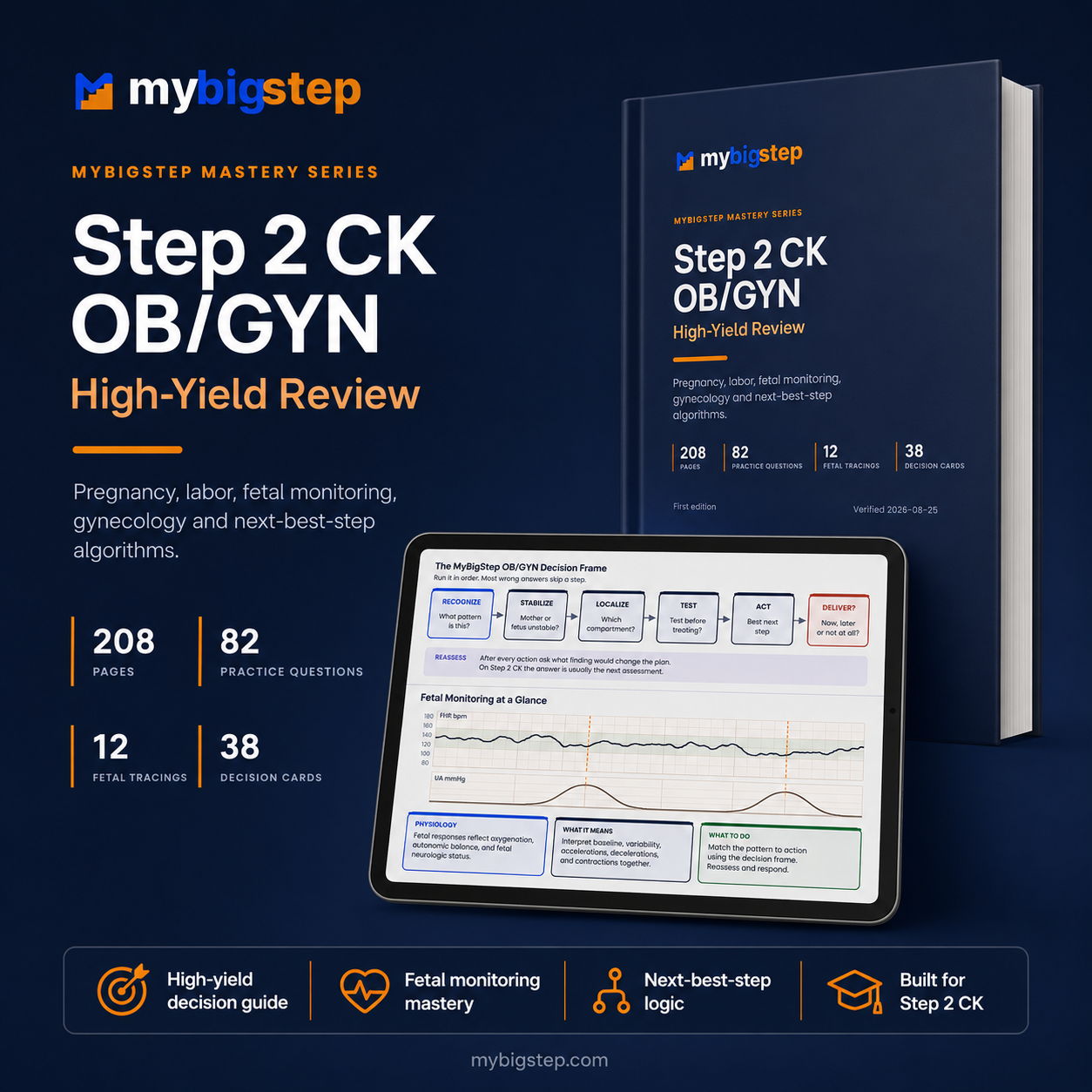
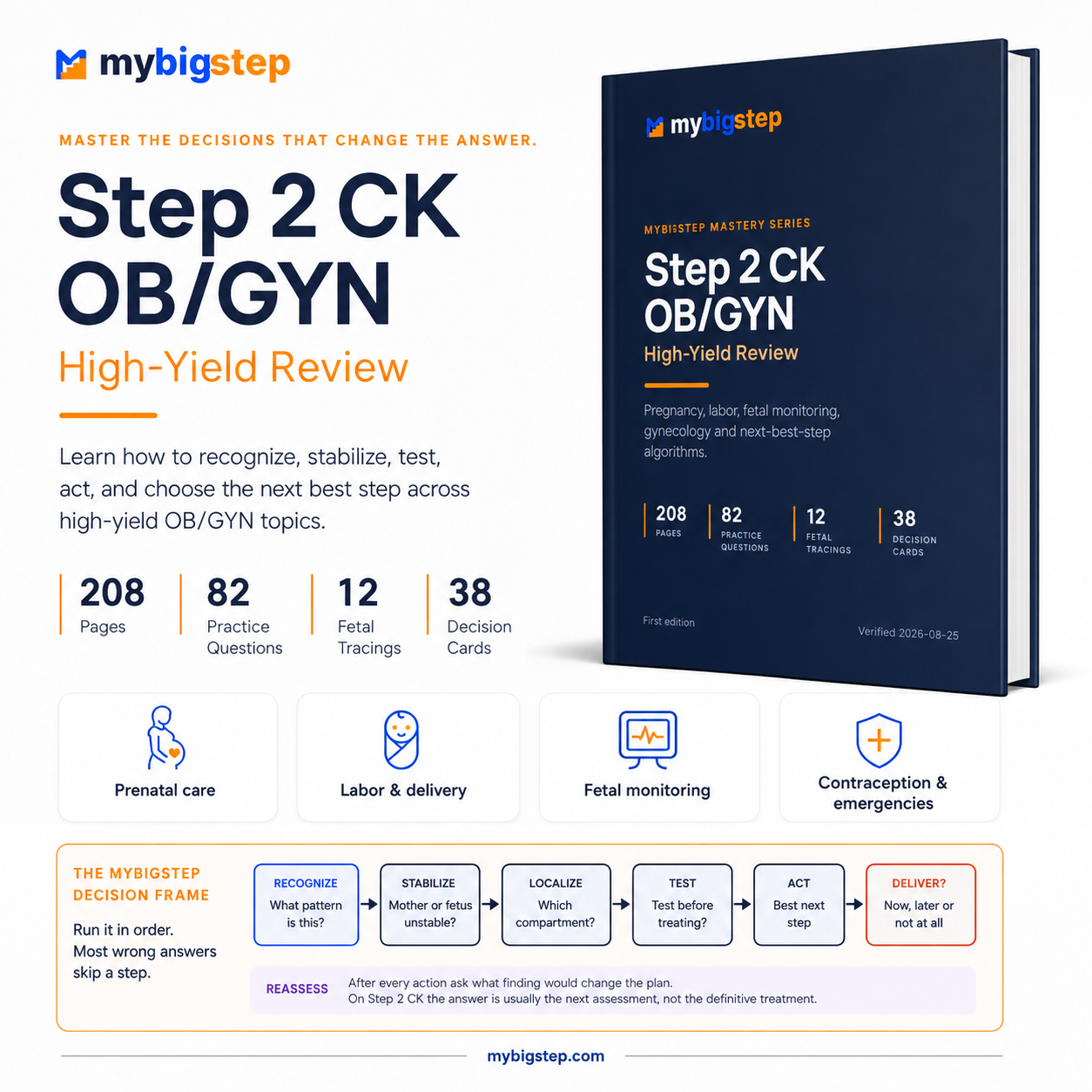
This guide is built around that gap. Every module works through the same sequence: recognize the pattern, stabilize if you must, localize the problem, test, act, decide whether to deliver, and reassess.
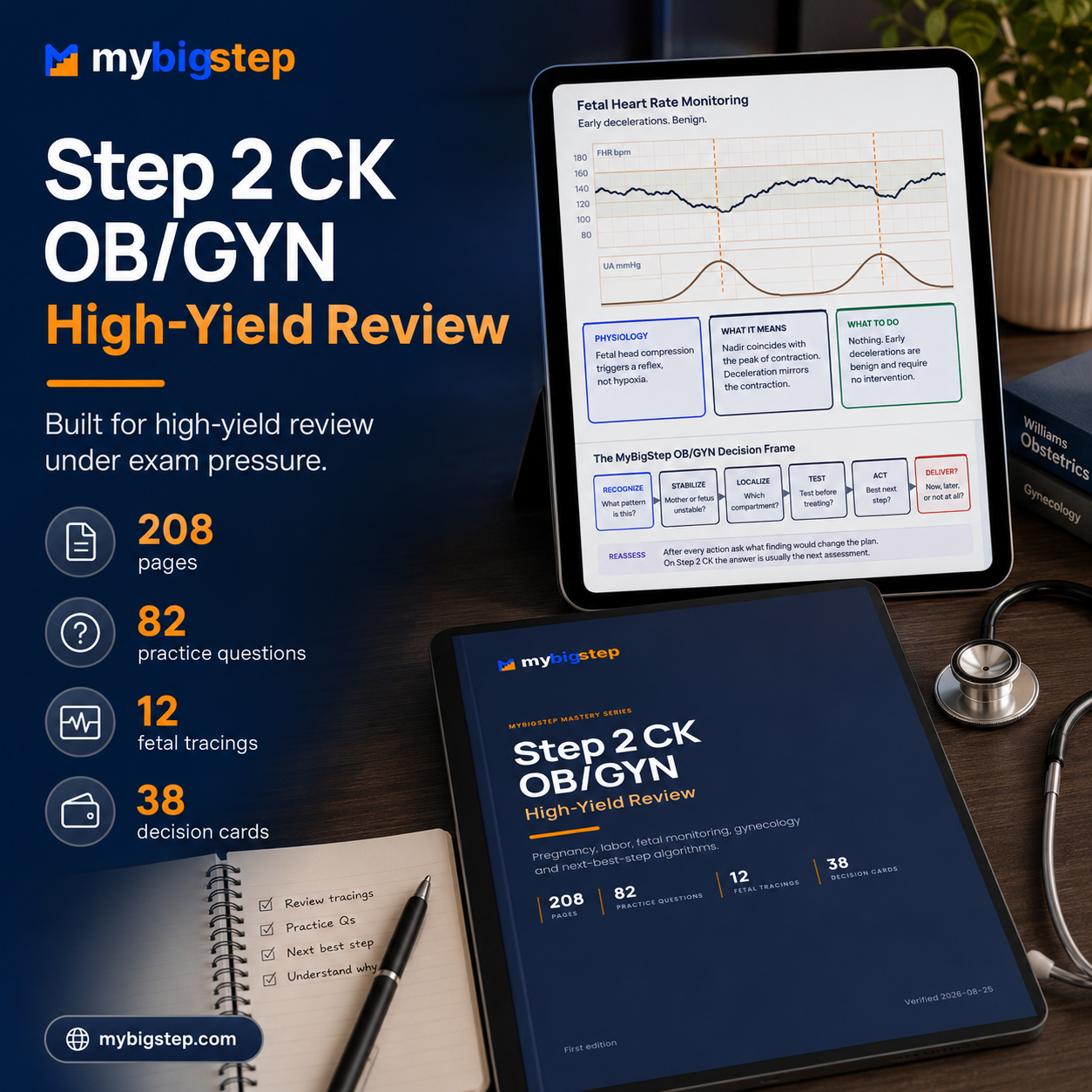
The fetal monitoring section is the reason most people buy it. Twelve tracings are generated in code from baseline, variability, contraction timing and deceleration offset, so an early and a late deceleration differ only in where the nadir sits against the contraction, which is exactly what the examination tests. Each carries its physiology, its meaning and the action it calls for.
What is inside
208 pages across 18 teaching modules, built for the last six weeks before the examination.
82 original practice questions across 20 topics, each with an eight part explanation: the correct answer, why it is correct, what is being tested, the recognition clue, the management rule, why every other option is wrong, the trap, and what would change the answer.
12 fetal monitoring tracings generated from physiologic parameters, not reproduced from anywhere.
25 deliver or wait cards: the delivery decision for one condition, plus what would change it.
46 two answers look right cards: the single detail that decides between two defensible options.
53 if this changes scenarios: one case held constant while one fact is varied at a time.
13 management algorithms and 32 comparison tables.
17 red flag boxes and 22 do not boxes, each with the reason attached.
100 rapid rules for the final week.
14 original figures drawn for this product.
Current, and dated
Every guideline dependent statement was checked against a named source on a named date, drawing on ACOG, CDC and USPSTF material, and the three positions most likely to differ from what you were taught are named and dated rather than left to surprise you. Where a source does not state a figure, the guide says so instead of inventing one.
Written for international graduates too
United States practice terms are defined where they differ from what you trained with, in place rather than in a separate remedial chapter.
Format
A 208 page PDF, searchable, with a clickable table of contents and a bookmark outline. US Letter portrait. Instant download after purchase.
Frequently asked
Are these real exam questions? No. All 82 questions were written for this guide. None is copied or recalled from any examination or any other resource, and every patient described is fictional.
Are the tracings scanned from somewhere? No. All 12 are generated in code from physiologic parameters, which is why an early and a late deceleration differ only in the one feature the examination actually tests.
Is this a question bank? No. There are 82 questions for self assessment. This is the reasoning layer around a question bank rather than a replacement for one.
How current is it? Sources were named, dated and verified as of August 2026. Obstetric and gynecologic guidance is revised frequently, so check anything decision critical against the current published source.
From MyBigStep, drawing on over a decade of experience guiding medical students and graduates through the USMLE and into the Match.
An educational resource for examination preparation, not medical advice. It does not provide medical advice for any individual, and nothing in it should be used to make a decision about a real patient. MyBigStep is not affiliated with or endorsed by the USMLE program, the NBME, the FSMB, ECFMG or Intealth, ACOG, the CDC or the USPSTF. USMLE is a registered trademark of the FSMB and the NBME.
Step 2 CK does not ask what the condition is called. It asks what you do next.
Most OB/GYN review teaches you to name the diagnosis. Step 2 CK has usually told you the diagnosis already, in the first sentence, and is asking what you do about it.
This guide is built around that gap. Every module works through the same sequence: recognize the pattern, stabilize if you must, localize the problem, test, act, decide whether to deliver, and reassess.
The fetal monitoring section is the reason most people buy it. Twelve tracings are generated in code from baseline, variability, contraction timing and deceleration offset, so an early and a late deceleration differ only in where the nadir sits against the contraction, which is exactly what the examination tests. Each carries its physiology, its meaning and the action it calls for.
What is inside
208 pages across 18 teaching modules, built for the last six weeks before the examination.
82 original practice questions across 20 topics, each with an eight part explanation: the correct answer, why it is correct, what is being tested, the recognition clue, the management rule, why every other option is wrong, the trap, and what would change the answer.
12 fetal monitoring tracings generated from physiologic parameters, not reproduced from anywhere.
25 deliver or wait cards: the delivery decision for one condition, plus what would change it.
46 two answers look right cards: the single detail that decides between two defensible options.
53 if this changes scenarios: one case held constant while one fact is varied at a time.
13 management algorithms and 32 comparison tables.
17 red flag boxes and 22 do not boxes, each with the reason attached.
100 rapid rules for the final week.
14 original figures drawn for this product.
Current, and dated
Every guideline dependent statement was checked against a named source on a named date, drawing on ACOG, CDC and USPSTF material, and the three positions most likely to differ from what you were taught are named and dated rather than left to surprise you. Where a source does not state a figure, the guide says so instead of inventing one.
Written for international graduates too
United States practice terms are defined where they differ from what you trained with, in place rather than in a separate remedial chapter.
Format
A 208 page PDF, searchable, with a clickable table of contents and a bookmark outline. US Letter portrait. Instant download after purchase.
Frequently asked
Are these real exam questions? No. All 82 questions were written for this guide. None is copied or recalled from any examination or any other resource, and every patient described is fictional.
Are the tracings scanned from somewhere? No. All 12 are generated in code from physiologic parameters, which is why an early and a late deceleration differ only in the one feature the examination actually tests.
Is this a question bank? No. There are 82 questions for self assessment. This is the reasoning layer around a question bank rather than a replacement for one.
How current is it? Sources were named, dated and verified as of August 2026. Obstetric and gynecologic guidance is revised frequently, so check anything decision critical against the current published source.
From MyBigStep, drawing on over a decade of experience guiding medical students and graduates through the USMLE and into the Match.
An educational resource for examination preparation, not medical advice. It does not provide medical advice for any individual, and nothing in it should be used to make a decision about a real patient. MyBigStep is not affiliated with or endorsed by the USMLE program, the NBME, the FSMB, ECFMG or Intealth, ACOG, the CDC or the USPSTF. USMLE is a registered trademark of the FSMB and the NBME.