You know what a mammogram is. The question is whether a 54 year old who smokes is due for one, and what else you are missing at the same visit.
Preventive care is not a reasoning topic. It is recall under pressure, against numbers that have all moved recently. Colorectal screening came down from 50 to 45 in 2021. Breast screening from 50 to 40 in 2024. Lung cancer screening from 55 and 30 pack years to 50 and 20, also 2021. Aspirin for primary prevention quietly stopped being recommended. And there is no current standalone recommendation on adult lipid screening at all, which is why your other resource gives you a start age this guide does not.
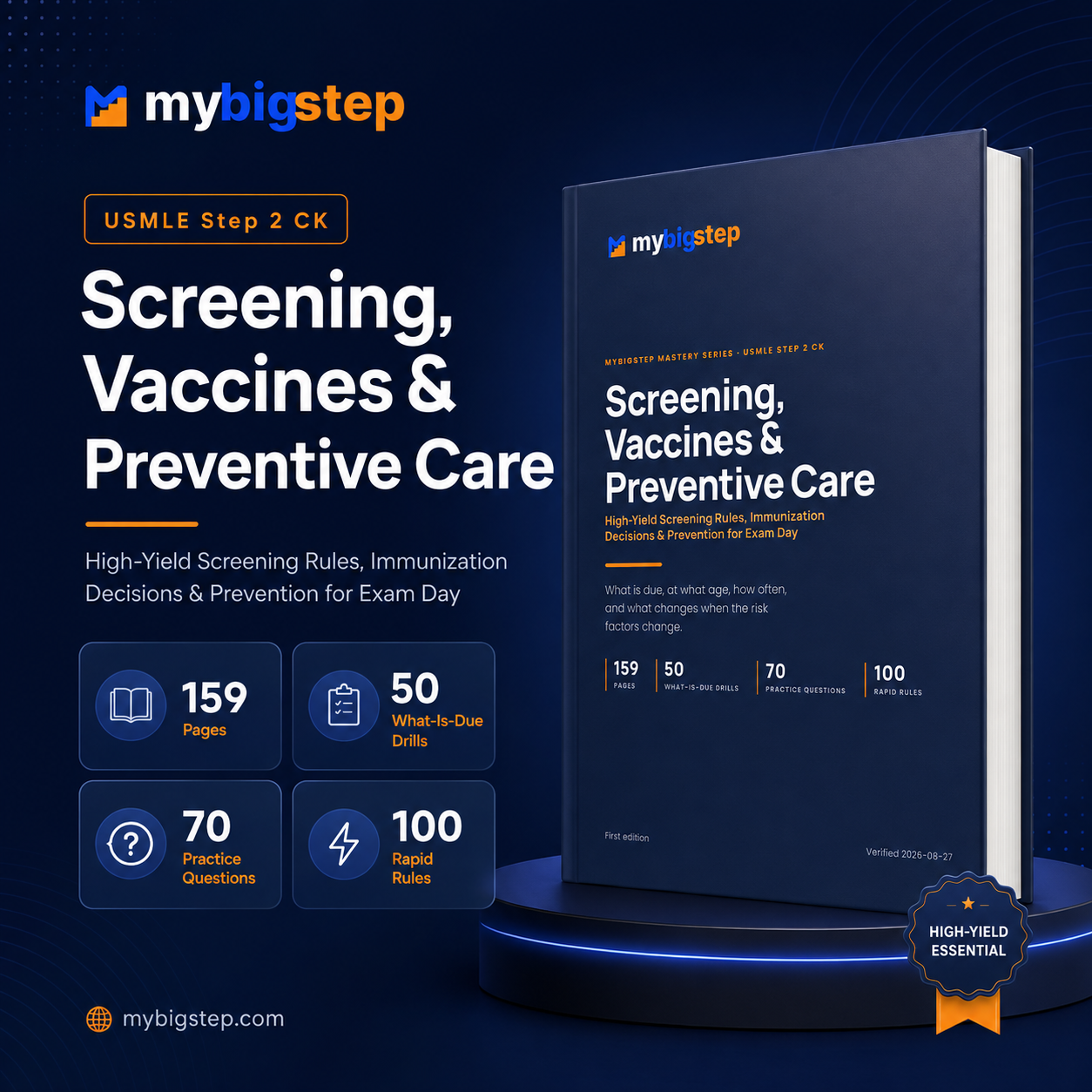
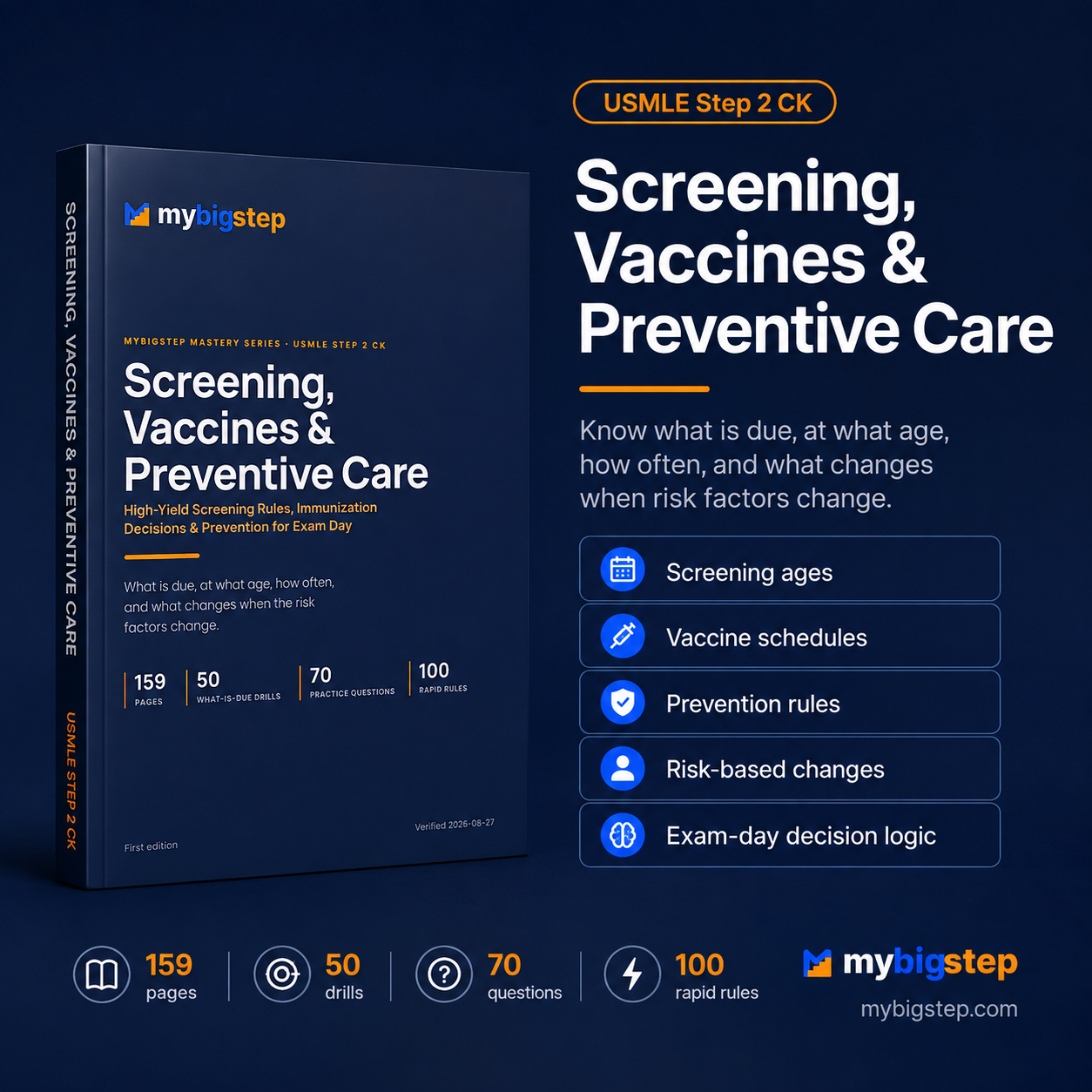
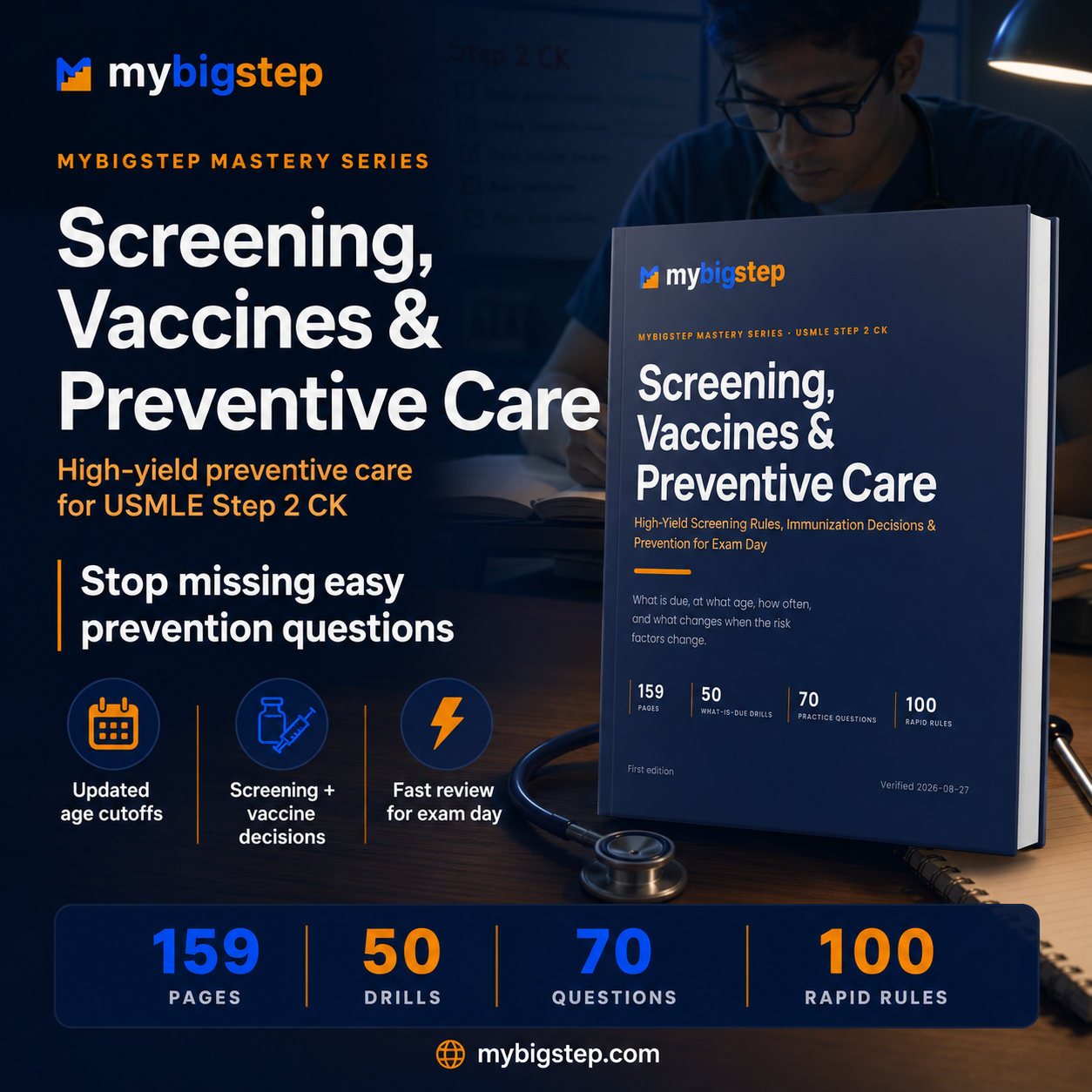
So this is a decision book. 159 pages of cards, each answering one question in one glance.
What is inside
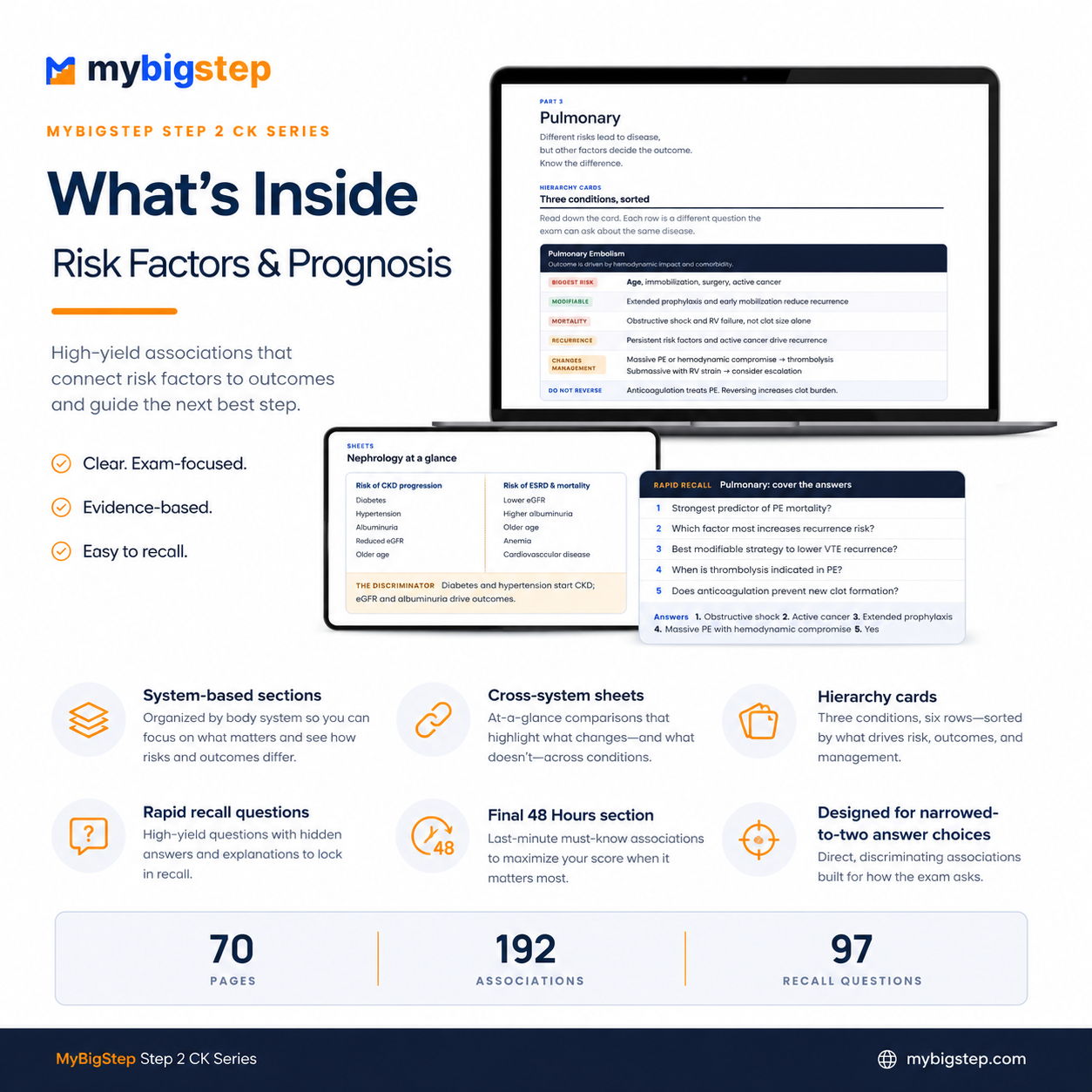
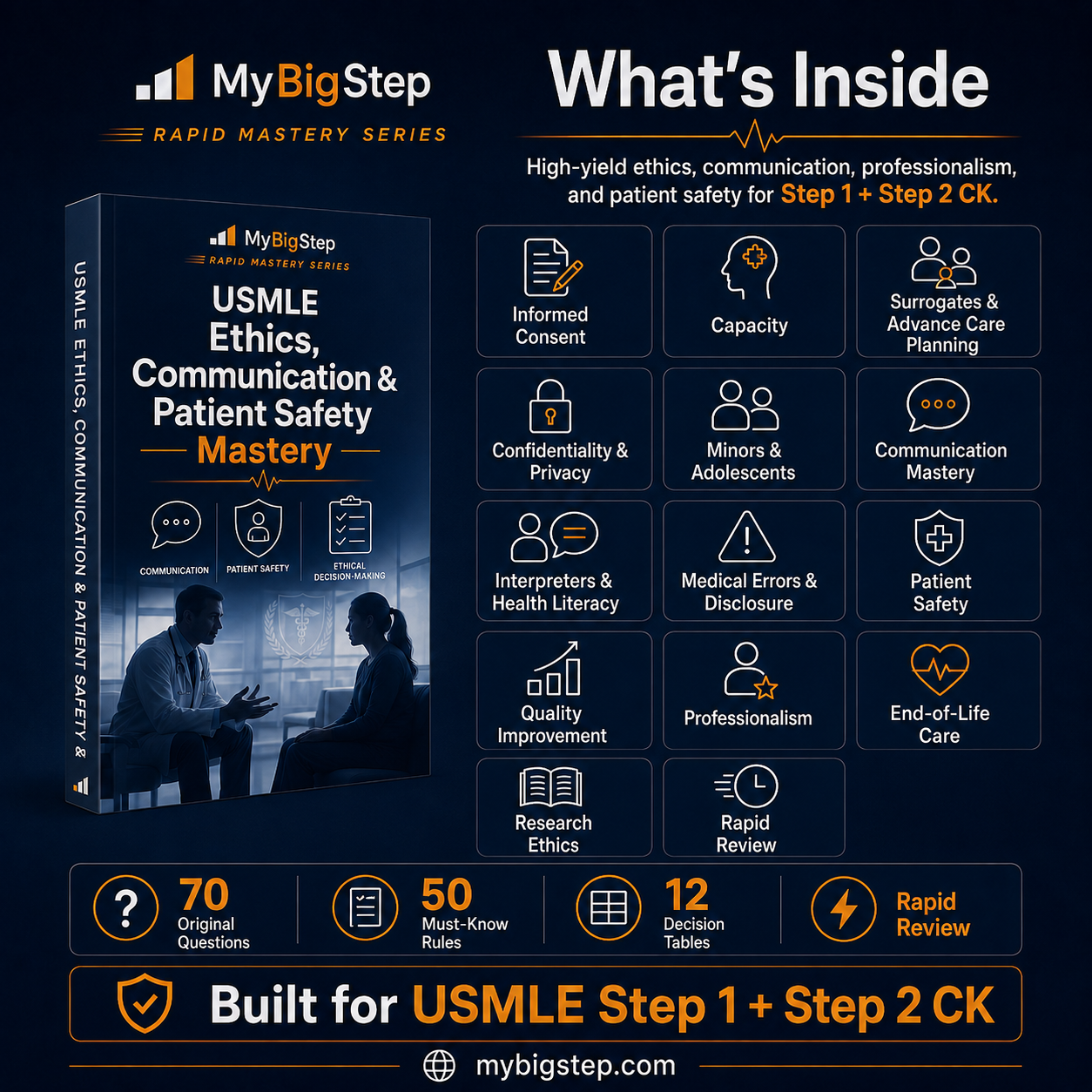
50 what is due today drills. A patient in one line, then a DUE and NOT DUE contrast, then the one item people miss. 440 due and not due decisions in total.
14 age anchors. Every age at which something starts, stops or repeats. Learn fourteen numbers and you can rebuild most of this topic from first principles.
27 screen, do not screen, or work up cards. The discrimination that decides most questions: the same test, three patients, three different answers.
30 vaccine decision cards. Give, do not give, or defer, each turning on one detail in the history. Plus the live list, the full contraindication table, and catch up logic.
30 risk changes the rule cards. What a family history, a genetic variant, asplenia, pregnancy or immunosuppression does to the base rule, and why.
45 traps, the specific wrong answers this topic is built on.
9 whole visit cards. One patient, several competing needs, and which one actually matters most.
18 patient records to work from a chart rather than a sentence.
20 what changed cards and 12 guideline conflict boxes. Where the bodies disagree, which answer the examination expects, and why they differ, so an unfamiliar number does not throw you.
70 original practice questions. Every explanation gives the rule behind the answer with its organization and year, why each wrong option is wrong, the most tempting distractor and why it attracts, and what would change the answer.
100 rapid rules and 40 last hour facts.
Every number carries its year
Each rule states the organization that publishes it and the year of the statement, so when another resource disagrees you can tell which one is out of date instead of doubting your memory.
Written for the examination, honest about the medicine
Where current policy is genuinely unsettled, the guide says so on the page, with the date. The childhood immunization schedule was restructured in January 2026 and the American Academy of Pediatrics publicly disagreed. The guide teaches the schedule the examination expects and tells you plainly that the policy position is contested. Where a claim could not be confirmed at its primary source, the guide says so on the page rather than presenting it with the same confidence as a verified figure.
Format
One PDF, 159 pages, with clickable contents and bookmarks, searchable text, and readable on a phone or tablet. Nothing depends on color, so it works printed in black and white. Instant download after purchase.
Frequently asked
Is this a question bank? No. There are 70 original questions for self assessment, and the rest is the decision layer that makes them answerable in eight seconds.
Are these real exam questions? No. All questions, cards, tables and figures are original work written for this guide. Nothing is reproduced from any examination, question bank or copyrighted review resource.
Why is it different from my other resource? Mostly dates. Several thresholds moved between 2021 and 2024, and this guide prints the year beside every one so you can tell which source is current.
How current is it? Screening content was read directly at the source in August 2026. Preventive care guidance changes, so verify against the current source before relying on any of it clinically.
From MyBigStep, drawing on over a decade of experience guiding medical students and graduates through the USMLE and into the Match.
An educational aid for examination preparation. Not medical advice, not a clinical protocol, and not a substitute for a current guideline or for the judgment of a treating clinician. No examination outcome is guaranteed. Modern AI assisted tools supported the research, organization, editing and visual production of this guide; no tool determined or verified a clinical claim on its own, and the finished guide was reviewed by a person before release. MyBigStep is not affiliated with, endorsed by, or sponsored by the National Board of Medical Examiners, the Federation of State Medical Boards, the United States Medical Licensing Examination program, the United States Preventive Services Task Force, the Centers for Disease Control and Prevention, the American Academy of Pediatrics, or any other organization named in these pages.
You know what a mammogram is. The question is whether a 54 year old who smokes is due for one, and what else you are missing at the same visit.
Preventive care is not a reasoning topic. It is recall under pressure, against numbers that have all moved recently. Colorectal screening came down from 50 to 45 in 2021. Breast screening from 50 to 40 in 2024. Lung cancer screening from 55 and 30 pack years to 50 and 20, also 2021. Aspirin for primary prevention quietly stopped being recommended. And there is no current standalone recommendation on adult lipid screening at all, which is why your other resource gives you a start age this guide does not.
So this is a decision book. 159 pages of cards, each answering one question in one glance.
What is inside
50 what is due today drills. A patient in one line, then a DUE and NOT DUE contrast, then the one item people miss. 440 due and not due decisions in total.
14 age anchors. Every age at which something starts, stops or repeats. Learn fourteen numbers and you can rebuild most of this topic from first principles.
27 screen, do not screen, or work up cards. The discrimination that decides most questions: the same test, three patients, three different answers.
30 vaccine decision cards. Give, do not give, or defer, each turning on one detail in the history. Plus the live list, the full contraindication table, and catch up logic.
30 risk changes the rule cards. What a family history, a genetic variant, asplenia, pregnancy or immunosuppression does to the base rule, and why.
45 traps, the specific wrong answers this topic is built on.
9 whole visit cards. One patient, several competing needs, and which one actually matters most.
18 patient records to work from a chart rather than a sentence.
20 what changed cards and 12 guideline conflict boxes. Where the bodies disagree, which answer the examination expects, and why they differ, so an unfamiliar number does not throw you.
70 original practice questions. Every explanation gives the rule behind the answer with its organization and year, why each wrong option is wrong, the most tempting distractor and why it attracts, and what would change the answer.
100 rapid rules and 40 last hour facts.
Every number carries its year
Each rule states the organization that publishes it and the year of the statement, so when another resource disagrees you can tell which one is out of date instead of doubting your memory.
Written for the examination, honest about the medicine
Where current policy is genuinely unsettled, the guide says so on the page, with the date. The childhood immunization schedule was restructured in January 2026 and the American Academy of Pediatrics publicly disagreed. The guide teaches the schedule the examination expects and tells you plainly that the policy position is contested. Where a claim could not be confirmed at its primary source, the guide says so on the page rather than presenting it with the same confidence as a verified figure.
Format
One PDF, 159 pages, with clickable contents and bookmarks, searchable text, and readable on a phone or tablet. Nothing depends on color, so it works printed in black and white. Instant download after purchase.
Frequently asked
Is this a question bank? No. There are 70 original questions for self assessment, and the rest is the decision layer that makes them answerable in eight seconds.
Are these real exam questions? No. All questions, cards, tables and figures are original work written for this guide. Nothing is reproduced from any examination, question bank or copyrighted review resource.
Why is it different from my other resource? Mostly dates. Several thresholds moved between 2021 and 2024, and this guide prints the year beside every one so you can tell which source is current.
How current is it? Screening content was read directly at the source in August 2026. Preventive care guidance changes, so verify against the current source before relying on any of it clinically.
From MyBigStep, drawing on over a decade of experience guiding medical students and graduates through the USMLE and into the Match.
An educational aid for examination preparation. Not medical advice, not a clinical protocol, and not a substitute for a current guideline or for the judgment of a treating clinician. No examination outcome is guaranteed. Modern AI assisted tools supported the research, organization, editing and visual production of this guide; no tool determined or verified a clinical claim on its own, and the finished guide was reviewed by a person before release. MyBigStep is not affiliated with, endorsed by, or sponsored by the National Board of Medical Examiners, the Federation of State Medical Boards, the United States Medical Licensing Examination program, the United States Preventive Services Task Force, the Centers for Disease Control and Prevention, the American Academy of Pediatrics, or any other organization named in these pages.