

 Image 1 of 3
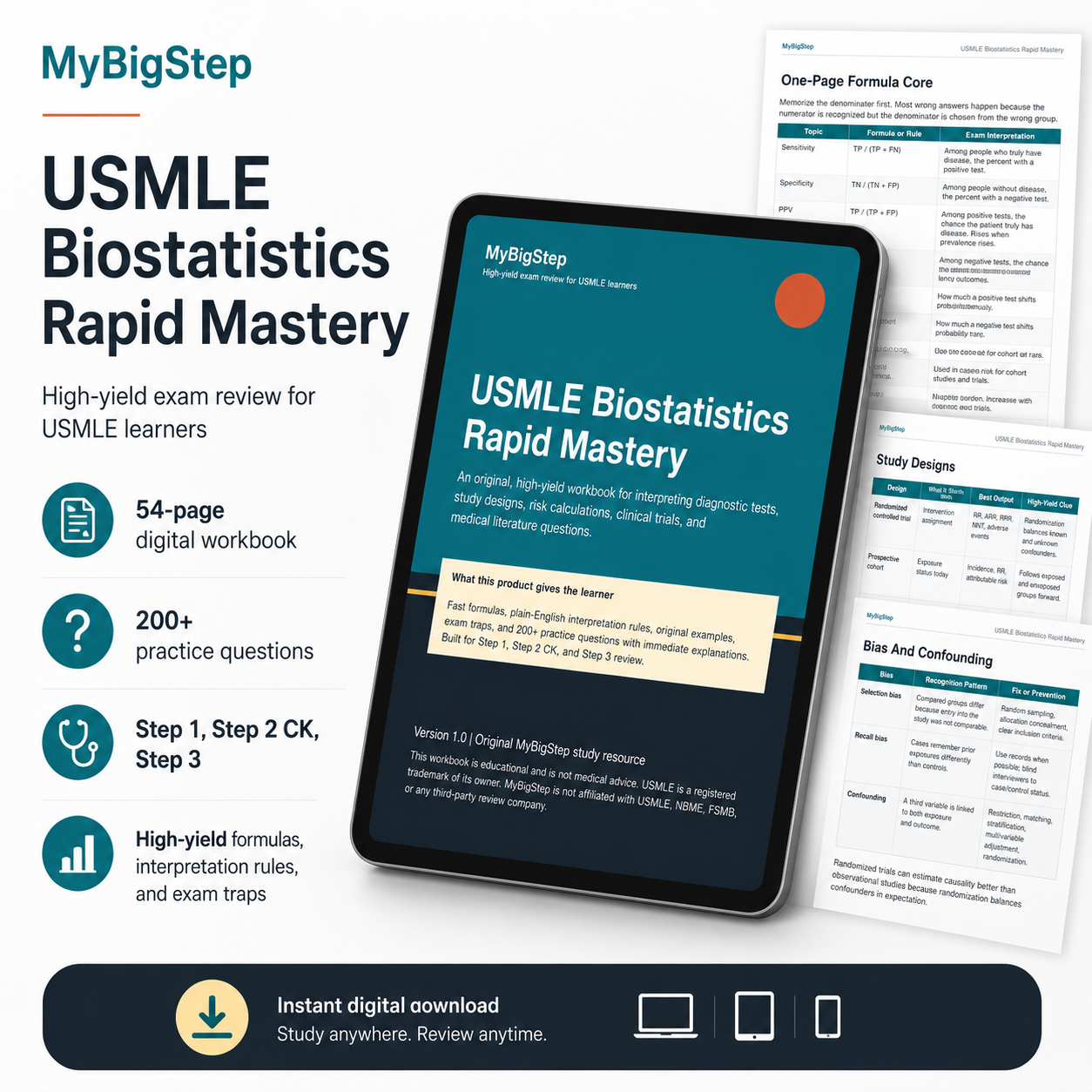 Image 2 of 3
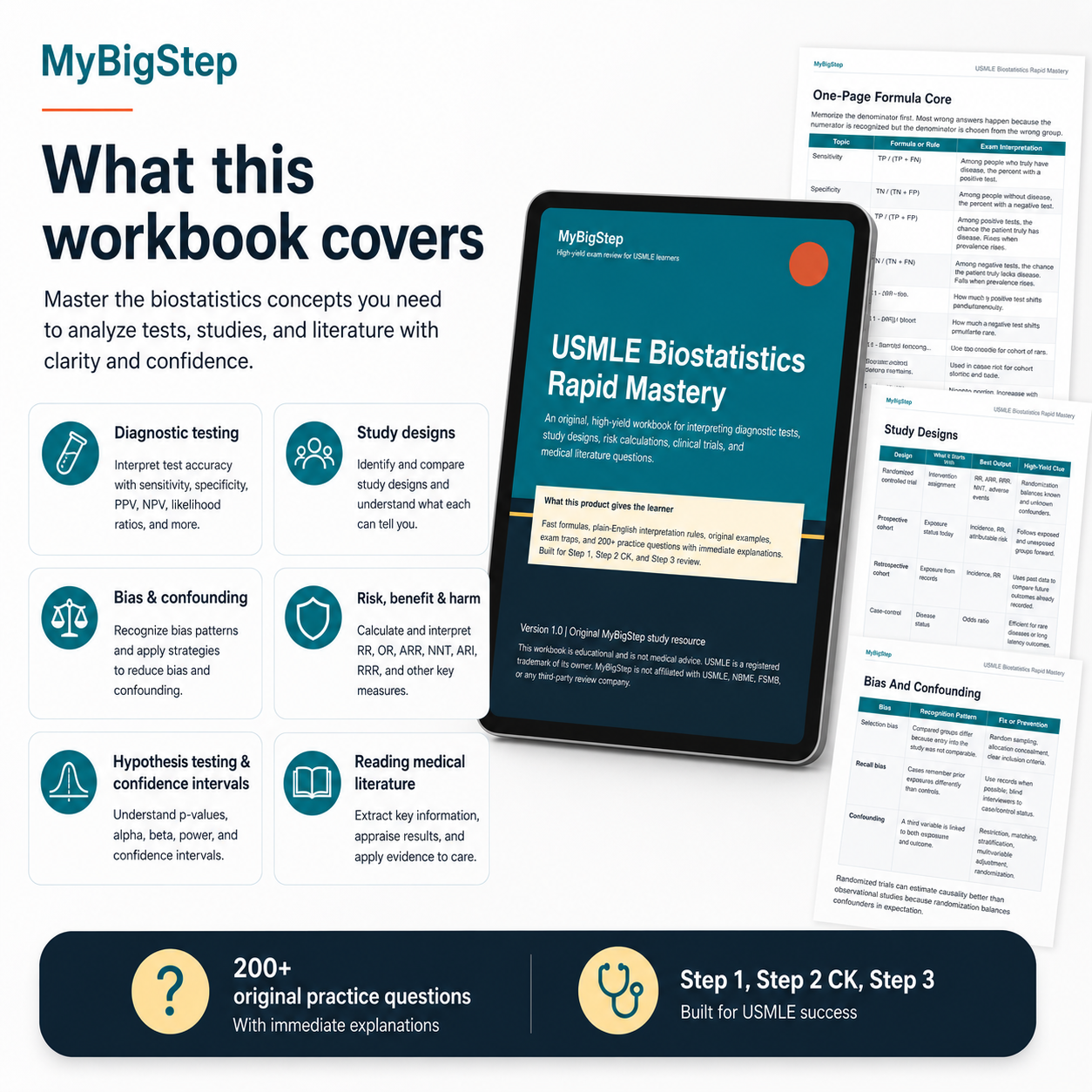 Image 3 of 3
A 54 page biostatistics workbook for the USMLE, built around 200 original exam-style questions with the answer and explanation printed directly under each one.
Biostatistics is one of the highest yield subjects per hour of study on the exam, and one of the easiest places to lose marks on questions you almost knew. This workbook drills the parts that actually get tested.
What is inside
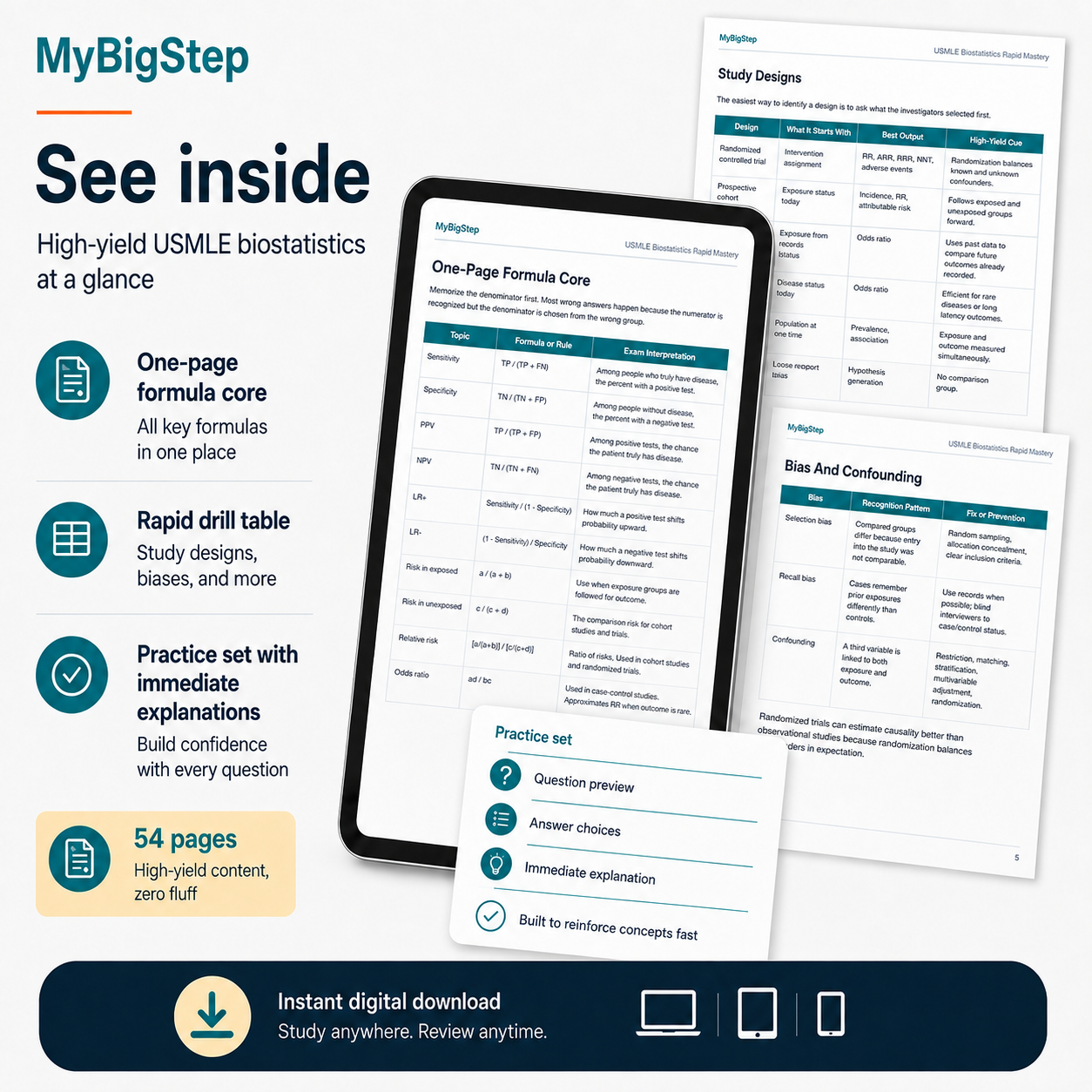
A one page formula core, so you fix the denominator before you reach for the numerator.
Diagnostic testing: sensitivity, specificity, PPV, NPV and post test probability, separating what describes the test from what describes the patient in front of you.
Study designs, and how to name one from what the investigators selected first.
Bias and confounding, including lead time, length time and selection bias.
Risk, benefit and harm: ARR, RRR, NNT and NNH turned into a sentence you could actually say to a patient.
Incidence, prevalence and rates.
Hypothesis testing and confidence intervals, including how to read an interval that crosses the line of no effect.
Choosing the right statistical test.
Descriptive statistics and skewed distributions.
Clinical trials and evidence, including noninferiority margins and intention to treat.
Reading medical literature the way an exam writer does.
Validity, reliability and measurement.
A worked calculation mini lab and a rapid drill table.
A practice set of 200 questions, each with its explanation immediately underneath.
Every question is original and written for this workbook. This is a study aid. It is not an official USMLE product and it is not a guarantee of any exam outcome. Delivered as a PDF.
A 54 page biostatistics workbook for the USMLE, built around 200 original exam-style questions with the answer and explanation printed directly under each one.
Biostatistics is one of the highest yield subjects per hour of study on the exam, and one of the easiest places to lose marks on questions you almost knew. This workbook drills the parts that actually get tested.
What is inside
A one page formula core, so you fix the denominator before you reach for the numerator.
Diagnostic testing: sensitivity, specificity, PPV, NPV and post test probability, separating what describes the test from what describes the patient in front of you.
Study designs, and how to name one from what the investigators selected first.
Bias and confounding, including lead time, length time and selection bias.
Risk, benefit and harm: ARR, RRR, NNT and NNH turned into a sentence you could actually say to a patient.
Incidence, prevalence and rates.
Hypothesis testing and confidence intervals, including how to read an interval that crosses the line of no effect.
Choosing the right statistical test.
Descriptive statistics and skewed distributions.
Clinical trials and evidence, including noninferiority margins and intention to treat.
Reading medical literature the way an exam writer does.
Validity, reliability and measurement.
A worked calculation mini lab and a rapid drill table.
A practice set of 200 questions, each with its explanation immediately underneath.
Every question is original and written for this workbook. This is a study aid. It is not an official USMLE product and it is not a guarantee of any exam outcome. Delivered as a PDF.